
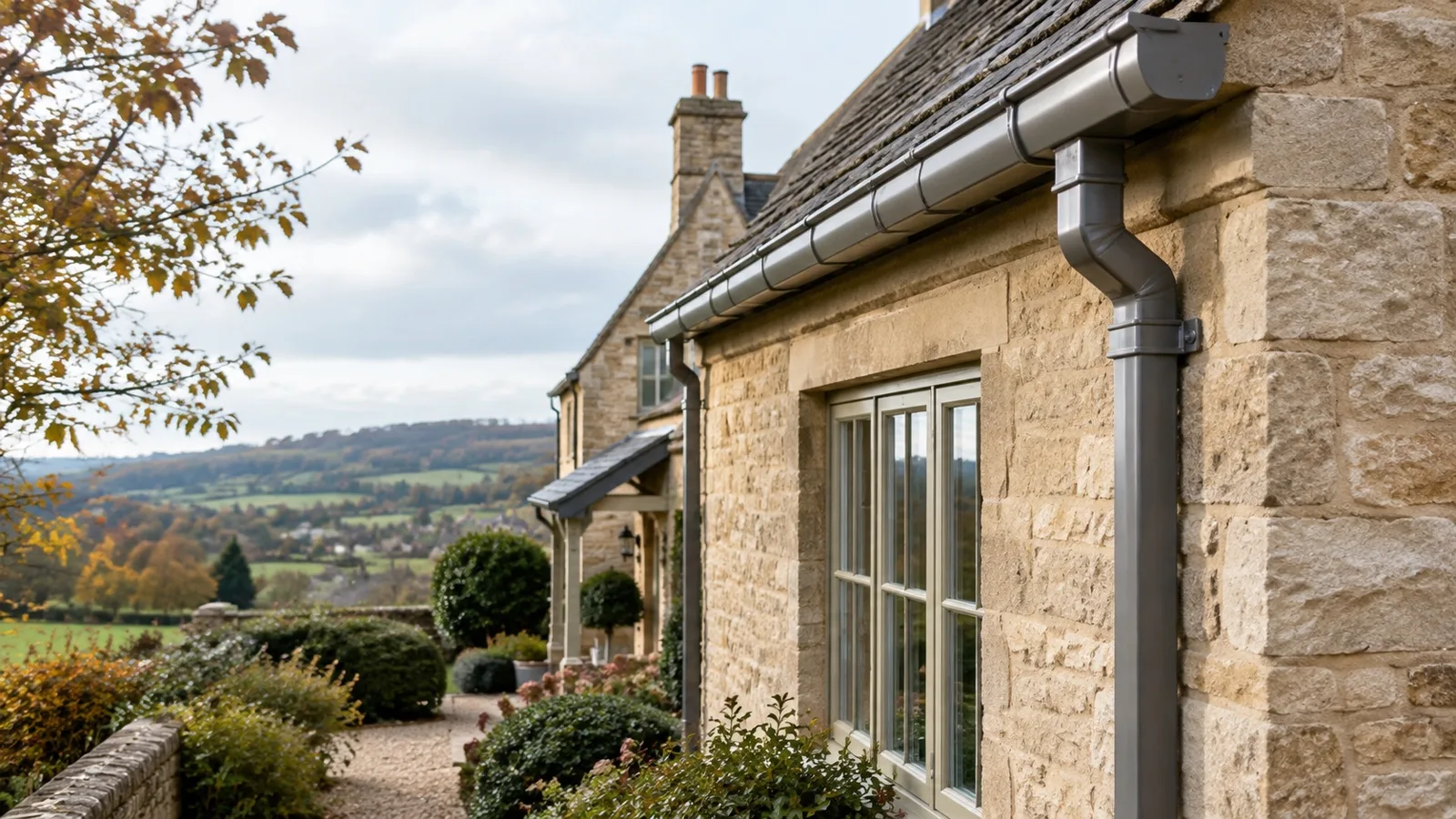
There is a distinctive stillness that settles over the countryside as autumn yields to early winter. From the honeyed stone cottages of the Cotswolds to the handsome brick terraces of Oxfordshire and Wiltshire, our homes begin bracing themselves for months of relentless rain, biting winds, and hard frosts. Yet, while most of us service the boiler and check the chimney before the cold snap arrives, the quiet guardians overhead are often overlooked.
Your rainwater goods work tirelessly in the background, channeling hundreds of gallons of water away from vulnerable brickwork, mortar, and timber. When they begin to fail, the consequences are rarely confined to an irritating drip. Left unattended through a freezing winter, minor defects quickly become costly structural headaches.
Whether you live in a modern family residence or a Grade II-listed manor, here is how to tell if your gutters need replacing before winter truly sets in.
1. The tell-tale sag and pooling water
A healthy rainwater system relies on a subtle, continuous pitch to carry water cleanly toward the downpipes. If you step back into your garden after a dry spell and notice sections of guttering dipping beneath the roofline, trouble is already brewing.
Sagging occurs when brackets corrode, timber fixings soften, or older systems buckle under the sheer weight of trapped silt and standing water. In winter, pooled water freezes into heavy slabs of ice, pulling the gutter further away from the roofline and warping the run. Modern seamless aluminium guttering eliminates this issue entirely, fabricated in continuous, bespoke lengths that offer rigid structural stability with no weak seams to bow or dip.
2. Rust streaks, cracking, and surface fatigue
Rainwater systems show their age in distinct ways depending on the material originally installed. If your property features original cast iron, look closely for orange rust bleeding through paintwork, particularly along the underside of the trough or around the collar joints. Once cast iron begins to rust from within, it loses its structural integrity and can crack cleanly during a hard frost.
Plastic systems, conversely, suffer from UV degradation. Over years of sun exposure, standard uPVC turns brittle and develops hairline fractures that open up under winter temperature swings. If you love the traditional, architectural silhouette of historic ironwork but dread the constant repainting, modern cast iron effect aluminium provides the identical heritage aesthetic with maintenance-free durability.
3. Water marks, peeling masonry, and green growth
You do not always need to be outside during a downpour to spot a failing gutter; the evidence often remains long after the clouds have cleared. Pay close attention to the external walls beneath your eaves for any of the following warning signs:
- Chalky efflorescence or white tide marks caused by mineral salts leaching through soaked brickwork or Cotswold stone.
- Localised patches of moss, algae, or lichen creeping down the exterior walls where a persistent mist of overflowing water settles.
- Peeling paintwork or spalling masonry, where trapped moisture behind render or within soft limestone freezes and forces the surface to pop off.
- Soil erosion or gouged mulch along garden borders directly beneath the roofline, indicating water is cascading straight over the edge rather than entering the downpipe.
4. Persistent leaks at joints and seams
Sectional gutters rely on internal neoprene seals, mastic, or leaded joints to keep water enclosed. With decades of seasonal expansion and contraction, these seals shrink, dry out, and perish.
While a single leaking joint can occasionally be patched, widespread dripping along multiple seams usually indicates that the system has reached the end of its serviceable life. Where decorative lead hoppers and downpipes are fitted on historic buildings, cracked leadwork or separated seams can allow gallons of rainwater to run straight down the masonry cavity every hour, causing devastating internal damp before anyone notices.
5. Rotting timber fascias and pulling brackets
A gutter system is only ever as sound as the structure supporting it. When gutters back up, water frequently spills backward over the rear edge, directly against the timber fascias and soffits.
Over time, this continuous dampness rots the timber behind the gutter brackets. You may notice screws pulling free, brackets hanging loose, or dark, spongy patches in the timber itself. In these cases, simply hanging new gutters is not enough; the fascias and soffits must be repaired or replaced to provide a sound, rot-free foundation that will withstand heavy winter snow loads.
Time to protect your home
Addressing tired guttering before the ground freezes is one of the most effective investments you can make in preserving your home's fabric. At Bespoke Guttering Solutions by Austen Dawson, we believe every property deserves a considered approach. We work across Gloucestershire, Oxfordshire, Wiltshire, and Berkshire, handling everything from clean, contemporary domestic aluminium guttering jobs through to full-scale restoration and installation of bespoke heritage rainwater systems.
If you have noticed any of these warning signs around your eaves, we would be delighted to take a closer look. Get in touch with our team today to arrange a friendly, professional survey of your home before winter arrives.