
There is a particular stillness to an early autumn morning across the Cotswolds and Gloucestershire, when the low mist clings to honeyed limestone and the hedgerows turn to russet. Yet beneath this gentle turn of the season lies an unavoidable truth: the British winter is waiting, and with it comes persistent rain, sudden frosts, and the relentless freeze-thaw cycles that test the fabric of our homes.
Rainwater systems are often an afterthought until water starts cascading over an eaves line or seeping into interior plaster. By the time an internal damp patch appears, structural damage is already underway. Whether your home is a contemporary build needing an everyday domestic aluminium guttering upgrade or a listed property requiring careful heritage restoration, taking a proactive look at your roofline now can save significant expense later.
Here are six unmistakable signs that your guttering has reached the end of its serviceable life and needs replacing before winter sets in.
Chronic leaks, cracked joints, and tell-tale staining
One of the most obvious signs of failure is water escaping where two lengths join. Traditional sectional profiles rely on union clips, gaskets, or mastic seals that degrade over time through thermal expansion and contraction. In older cast iron systems, rust often attacks these hidden junctions first, while modern plastic alternatives become brittle under summer UV before cracking in cold snaps.
Take a walk around your home during a steady drizzle. If you notice grey, black, or green vertical streaks trailing down your elevations, water is almost certainly finding a way through. In parts of Oxfordshire and Wiltshire where period stone and lime render dominate, this persistent moisture draws damp straight into the wall, breaking down the breathable mortars that keep historic buildings healthy.
Sagging profiles and pooling water
Gutters should maintain a subtle, continuous fall towards downpipes and outlets. Over years of catching heavy leaf litter and bearing the weight of sodden debris, brackets loosen and gutter sections begin to dip.
When gutters sag, rainwater pools in the low points rather than draining freely. In winter, this trapped water freezes into heavy blocks of ice, expanding outward and placing immense shear weight on your fixings. If you look up and see uneven, wavy lines along your eaves, the fall is compromised and the brackets are likely pulling free from the structure.
Rotting timber fascias and soft soffits
A failing gutter does not simply spill outward; it frequently spills backward, directly against the eaves. Prolonged overflow saturates the timber fascias and soffits that support the gutter brackets.
Once timber begins to soften with wet rot, screws lose their bite, creating a vicious cycle where the gutter tilts further forward and spills even more water. Replacing old rainwater goods often requires addressing these timber fascias or replacing them altogether with durable, ventilated alternatives that protect your roof timbers from hidden damp.
Rust, flaking coatings, and metal fatigue
Surface rust on heritage cast iron guttering can sometimes be scraped, primed, and repainted, but there comes a tipping point. When oxidisation causes metal to flake away in sheets—often termed metal fatigue—the integrity of the channel is gone. The iron becomes paper-thin and will easily crack under the weight of winter snow.
If you prefer to preserve the timeless aesthetic of an older property without the laborious upkeep of iron, modern alternatives offer a sensible way forward. High-grade aluminium guttering can replicate traditional moulded profiles with powder-coated finishes that withstand the elements for decades, avoiding the repetitive maintenance cycle of traditional paints.
Diagnostic signs to watch for around the property
Not every symptom of gutter failure presents itself high up at the roofline. Often, the clearest indicators appear at ground level or around perimeter drainage:
- Soil erosion, trenches, or displaced gravel directly beneath the eavesline.
- Lichen, moss, or white efflorescence blooming heavily on the lower brickwork.
- Water pooling directly beside external foundation walls rather than heading towards gullies.
- Loose or rattling downpipe brackets that pull away from the masonry during high winds.
Pulled fixings and bowed downpipes
Downpipes are subject to substantial hydraulic pressure when a downpour overwhelms the roof. If a downpipe splits at the back—a frequent occurrence after severe frosts—the leak remains concealed against the wall for months. Masonry fixings corrode, wall plugs work loose from historic lime mortar, and the pipe begins to pull away from the wall.
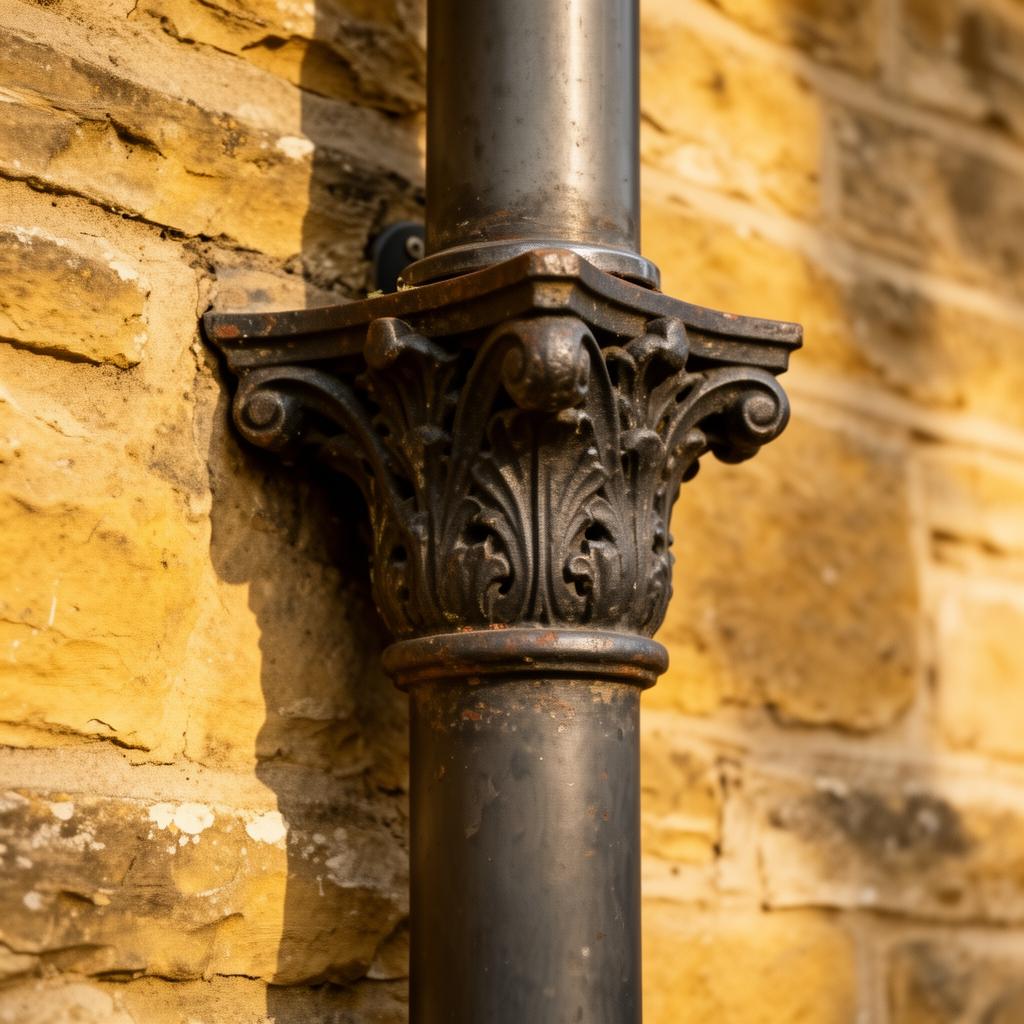
When downpipes pull free, decorative elements like ornamental lead hoppers or cast rainwater heads can become structurally unsafe under their own considerable weight, posing a hazard to anyone walking beneath.
Preparing your home for the wet season
Every property demands its own architectural approach. At Bespoke Guttering Solutions by Austen Dawson, our work spans both everyday domestic aluminium jobs—such as sleek, low-maintenance seamless aluminium profiles tailored to modern family homes—and bespoke heritage rainwater systems designed to honour period architecture with authentic cast iron, lead hoppers, copper, and zinc.
Taking time to inspect your rainwater goods in autumn gives you the window needed to commission a proper replacement before damp weather and sub-zero temperatures take hold across the Cotswolds, Gloucestershire, and Oxfordshire.
If you suspect your rainwater system is no longer protecting your property as it should, we would be delighted to arrange a comprehensive roofline survey and advise you on the most enduring solution for your home.