
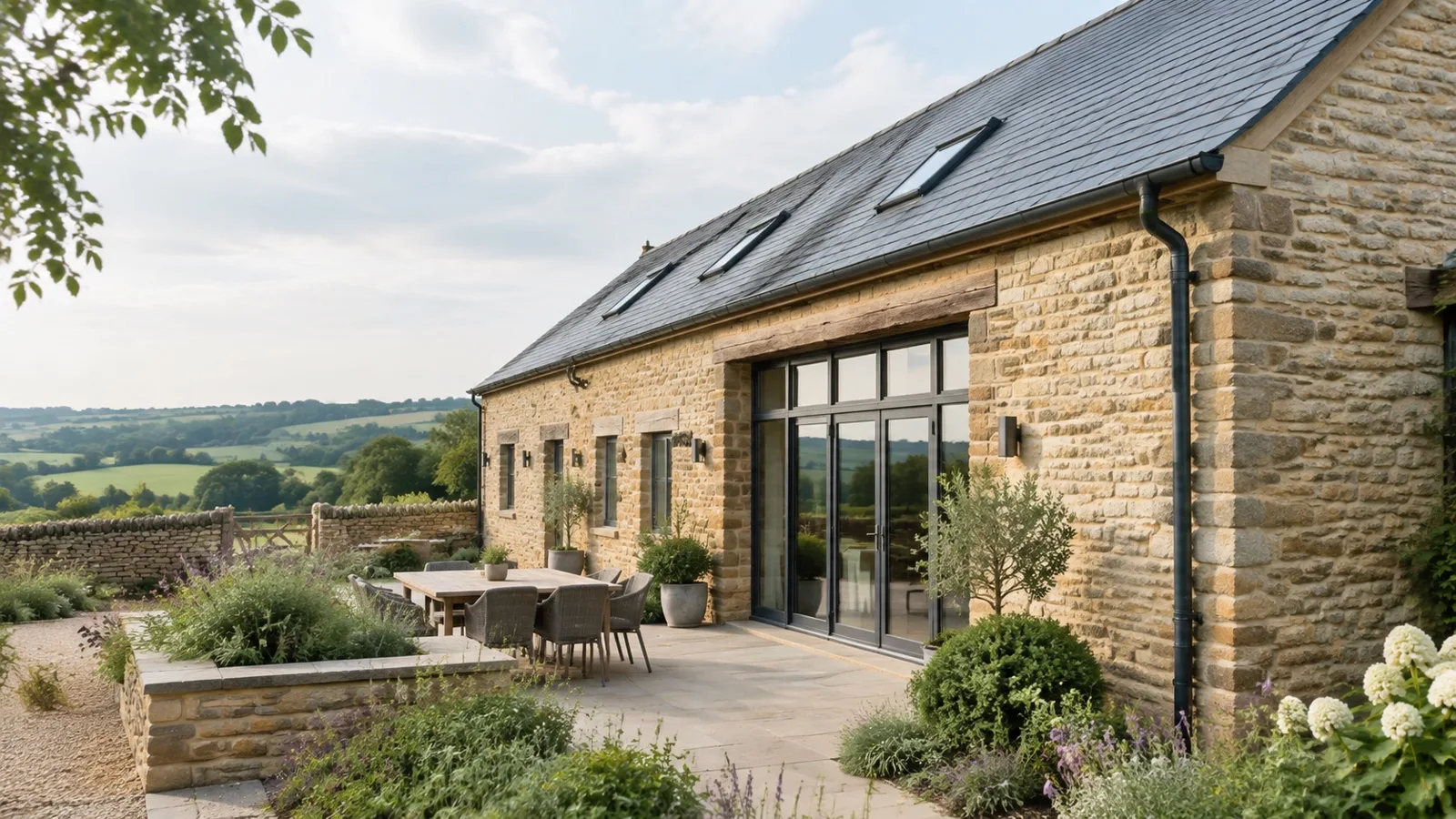
There is a singular romance to a Cotswold barn conversion. Whether it is an expansive stone threshing barn nestled into an undulating Gloucestershire valley or a collection of low-slung agricultural byres bordering an Oxfordshire farmyard, these buildings carry an innate sense of place. Their rugged honeyed limestone, massive timber cruck frames, and steep, stone-slated pitches tell centuries of rural history.
Yet taking an agricultural structure designed for cattle or grain and turning it into a refined, comfortable family home presents distinct architectural puzzles. One of the most critical—and frequently underestimated—is how to manage the vast volume of rainwater coming off an agricultural roof without spoiling the building’s character.
The Architecture of Agricultural Eaves
Unlike traditional village cottages or Victorian farmhouses, agricultural barns were never built with domestic niceties in mind. They rarely feature conventional fascias and soffits. Instead, rafter feet are often left exposed, or eaves sail directly over dry-stone walls with minimal overhang.
This means standard off-the-shelf plastic gutter systems look jarringly out of place, instantly puncturing the rustic dignity of the masonry. Furthermore, agricultural roofs possess enormous surface areas. During a sudden English deluge, they shed water at an astonishing rate. Gutters on a conversion must not only look entirely sympathetic to the fabric of the building, but they also need the hydraulic capacity to protect porous lime mortar and stone foundations from deluge and saturation.
Respecting History with Cast Iron and Lead
For Grade II listed barns or properties falling within strict conservation areas across the Cotswolds and north Wiltshire, the planning mandate is clear: materials must respect the original agricultural vernacular. In these settings, authentic cast iron remains an unrivalled choice.
Cast iron brings weight, presence, and crisp historical detailing that settles naturally against weathered limestone. Installed on traditional rise-and-fall brackets driven straight into the stone, or side-rafter brackets secured directly to structural timbers, cast iron avoids the need for modern timber fascia boards entirely.
Where massive valleys or intersecting roof planes create concentrated torrents, decorative lead hoppers offer both functional capacity and bespoke visual interest. Handcrafted leadwork or restored original hoppers lend an authentic sense of permanence, bridging the gap between utilitarian farming origins and considered architectural restoration.
Modern Vernacular: Zinc and Seamless Aluminium
Not every barn conversion leans entirely into traditionalism. A growing number of ambitious projects across Berkshire and Oxfordshire pair historic stone with striking contemporary elements—oversized floor-to-ceiling glazing, blackened timber cladding, and polished concrete floors.
For these hybrid spaces, rainwater goods can provide a crisp, architectural punctuation mark rather than simply attempting to blend into the background:
- Beaded half-round profiles: Offer a soft, understated shadowline that echoes historical ironwork without unnecessary ornamentation.
- Deep-flow half-round systems: Provide increased capacity for oversized roof pitches without appearing overly industrial.
- Box profiles in dark finishes: Lend clean, deliberate lines that complement contemporary metal-framed windows and modern timber slats.
- Natural zinc or copper: Weather gradually to form a living patina, sitting handsomely against both weathered timber and golden stone.
Sleek, powder-coated aluminium guttering has become a firm favourite for contemporary agricultural conversions. Robust, lightweight, and completely rust-free, it provides an exceptionally clean visual line. Systems such as seamless aluminium are formed to exact measurements on site, removing vulnerable joint lines across expansive barn eaves and drastically reducing the risk of long-term leaks.
Choosing the Right Approach for Your Project
Every barn presents its own structural quirks, from bowed walls to uneven rafters. Deciding between a faithfully traditional restoration or a crisp, modern aesthetic ultimately comes down to the building’s setting, its architectural narrative, and the stipulations of local conservation officers.
At Bespoke Guttering Solutions by Austen Dawson, we approach every building with the careful craftsmanship it deserves. While we regularly handle everyday domestic aluminium jobs for homeowners looking for dependable, low-maintenance drainage, we also specialise in complex, bespoke heritage rainwater systems designed specifically for period homes and agricultural conversions.
Whether you are reviving an ancient threshing barn or putting the finishing touches to a contemporary agricultural redesign, the right rainwater goods ensure your investment remains protected and visually grounded for decades to come.
If you are planning a barn conversion or looking to upgrade tired rainwater systems across the Cotswolds and neighbouring counties, please get in touch with our team to arrange an on-site survey and tailored advice.