Replacing the guttering on a listed building sits in an awkward grey area. Owners are often told two contradictory things: that it is only maintenance, and that it needs full consent. Both can be true, depending on what you are proposing.
The simple test
Listed building consent is required for works that affect the special architectural or historic interest of the building. For rainwater goods that generally works out as:
- Like-for-like repair — repairing a cracked cast iron section, replacing a broken bracket, hand-stripping and repainting existing gutters: normally maintenance, no consent needed.
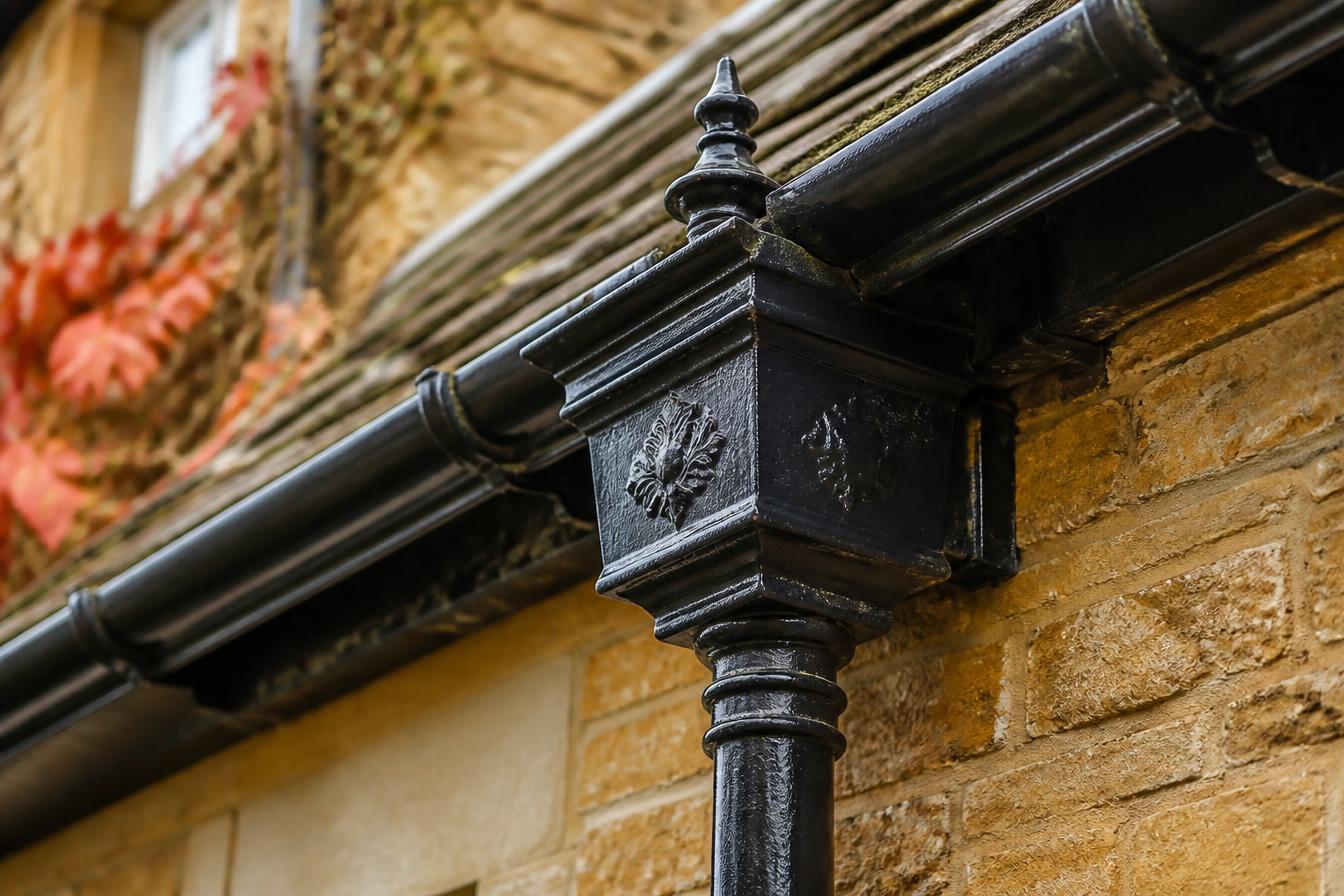
- Like-for-like replacement — replacing failed cast iron with new cast iron of the same profile and colour: usually acceptable without consent, but most conservation officers appreciate being told, and some authorities want a written confirmation on file.
- Change of material or profile — cast iron to aluminium, ogee to half-round, adding a new downpipe or hopper on a principal elevation: consent is very likely required.
Unauthorised work to a listed building is a criminal offence rather than a planning breach, which is why we always advise a short email to the conservation officer before the scaffold goes up. That email costs nothing and settles the question in writing.
What officers in this region usually want to see
Across West Oxfordshire, Cotswold District, Stroud, Cheltenham, Wiltshire and West Berkshire, applications tend to run smoothly when they include:
- Photographs of the existing rainwater goods, including close-ups of joints, brackets and hopper heads
- A clear statement of condition — why the existing system has failed, with evidence rather than assertion
- Manufacturer profile drawings of the proposed sections, showing that the profile matches the original
- Colour and finish — usually black, occasionally a documented historic colour
- The fixing method, particularly whether new holes are being formed in historic stone or existing fixing points reused
Cast iron effect aluminium on listed buildings
Officers vary. On a Grade II farmhouse away from a principal elevation, a well-detailed cast iron effect aluminium system is often accepted, particularly where the original was already lost to plastic in the 1970s. On Grade I and Grade II* buildings, and on prominent elevations of any listing, expect to be asked for cast iron.
The argument that works is evidential, not aesthetic: show the profile match, the joint detail and the fixing centres. The argument that fails is that aluminium is cheaper.
Where original fabric survives
If the building still has its original rainwater goods, repair almost always beats replacement in the eyes of a conservation officer, and often in cost too. Cast iron that is structurally sound can be taken down, shot-blasted, primed and repainted, with only the failed sections replaced. We keep the salvageable lengths and match the rest.
How we handle it
We survey, photograph and document the existing system, produce the specification and profile information your application needs, and speak to the conservation officer directly when that helps. We do this routinely on listed homes in Burford, Chipping Campden, Cirencester, Tetbury, Marlborough, Bradford-on-Avon and across the wider region.
Related reading: Guttering a listed building: navigating heritage in the Cotswolds and Cast iron guttering: the honest choice for heritage homes.
If you are unsure whether your project needs consent, send us the details and we will tell you honestly.