
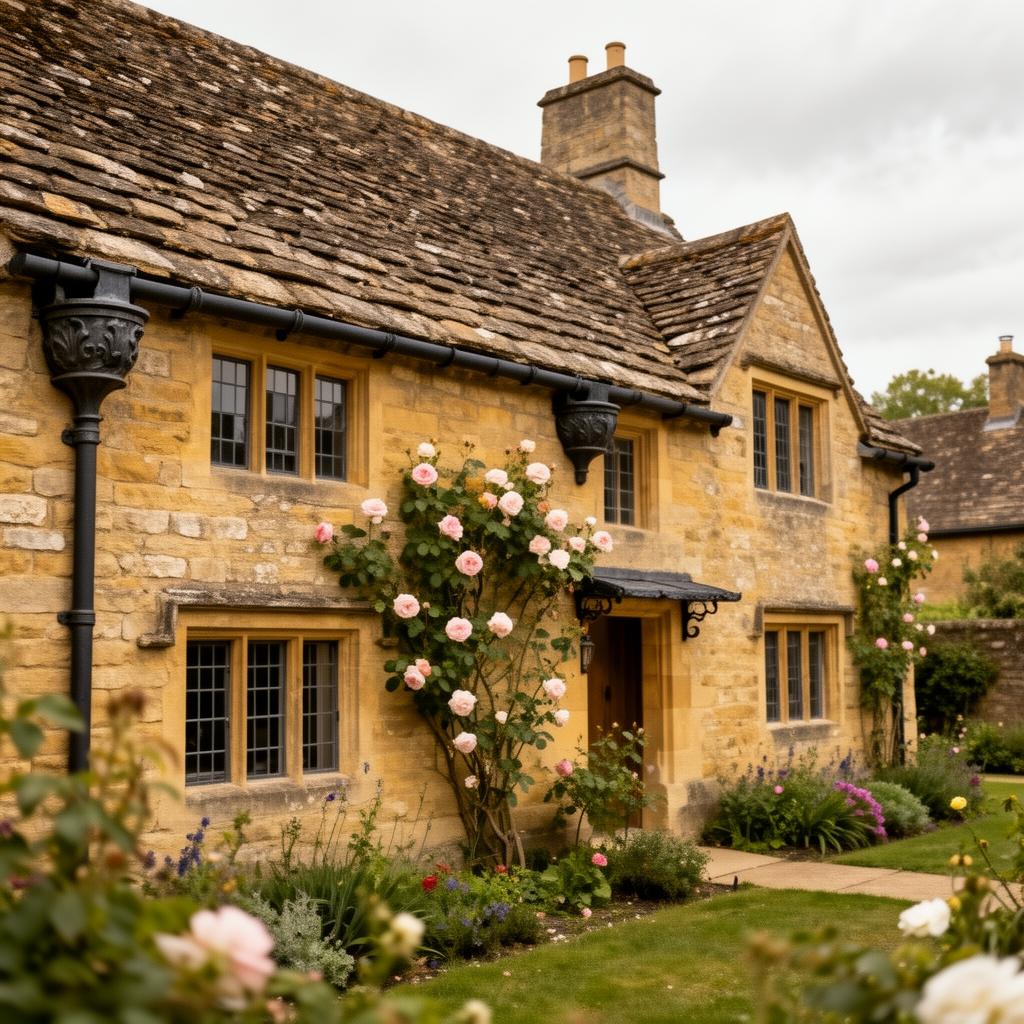
There is an unmistakable warmth to oolitic limestone that defies simple definition. Depending on the weather, the hour, and the season, Cotswold stone shifts effortlessly from soft oatmeal and muted straw to rich, sun-drenched amber. Paired with the weathered grey of traditional stone slates or the deep charcoal of Welsh slate, it creates an architectural vernacular celebrated throughout the world. Yet this quiet harmony is easily unsettled by the wrong roofline details.
Rainwater goods are often treated as an afterthought—purely functional conduits designed simply to divert water away from external walls. On a stone-built home, however, the guttering forms a distinct visual frame. The line beneath the eaves defines where the warm masonry meets the shadow of the roof. Choosing a profile, metal, and colour that respects these organic textures is essential if a property is to retain its inherent grace.
The Enduring Character of Traditional Cast Iron
For listed farmhouses and historic manors across Gloucestershire and Oxfordshire, traditional cast iron remains the peerless benchmark. It carries a reassuring solidity that feels entirely rooted in its surroundings. The slightly pitted texture of sand-cast iron softens hard edges, ensuring that downpipes and gutters sit comfortably against uneven stone walls rather than appearing stark or overly clinical.
When carrying out sympathetic restoration, authentic detailing makes all the difference. Ornate brackets, traditional astragal joints, and decorative lead hoppers bring depth and craftsmanship to elevations that have stood for centuries. A bespoke hopper embossed with a date or family emblem does more than collect rainwater; it acts as an architectural punctuation mark that honours the integrity of the building.
Modern Versatility: Seamless Aluminium and Heritage Finishes
While historic homes often demand pure heritage materials, modern living and lighter structures frequently call for more agile solutions. High-performance aluminium guttering has transformed what is possible, marrying clean engineering with timeless proportions.
At Bespoke Guttering Solutions, we work across both sides of this craft. Our team regularly completes everyday domestic aluminium jobs—such as upgrading contemporary extensions or family homes—just as readily as we fabricate and fit bespoke heritage rainwater systems for protected country estates. For stone homes where weight, budget, or low maintenance are key considerations, cast iron effect aluminium provides an exceptional compromise. It reproduces the authentic textured feel and classic profile of cast iron while delivering the leak-free longevity and lightness of modern marine-grade alloys.
Seamless aluminium gutters, extruded directly on site, eliminate joint failure entirely. When finished in a durable polyester powder coat, they create a crisp, understated shadow-line that lets the natural beauty of Cotswold rubble stone take centre stage.
Choosing the Right Colour and Profile
Achieving the right balance requires a thoughtful approach to tone. Brilliant whites and glossy finishes can look incongruous against weathered limestone. Instead, the aim is usually to either blend the rainwater system with the darker tones of the roof slates or let it settle quietly against the eaves.
When specifying rainwater systems across Wiltshire and the Cotswolds, several profile and colour pairings consistently yield beautiful results:
- Deep Matt Black or Charcoal: Mimics traditional bitumen-painted iron, tying in naturally with Welsh slate and dark timber fascias.
- Earthy Heritage Greens and Off-Whites: Muted tones such as lichen green or soft stone grey work sympathetically on cottage elevations where downpipes cross lighter masonry.
- Deep Half-Round Profiles: Excellent for coping with the high water run-off from steep slate pitches while maintaining a soft, classic contour.
- Moulded Ogee Profiles: Ideal for higher-status Georgian or Victorian properties, offering an elegant decorative flourish reminiscent of carved stone cornicing.
- Natural Copper and Zinc: Superb choices that oxidise gracefully over time, maturing into an earthy patina that sits remarkably well beside ancient ashlar stone.
Respecting the Fabric of the Building
Installing guttering against rough-hewn stone requires patience and an understanding of historic fabric. Solid stone walls rarely run in perfect, uninterrupted straight lines. Forcing a rigid system onto undulating masonry can cause stress fractures or awkward offsets that ruin the eaves line.
Using correct rise-and-fall brackets driven directly into mortar joints, or securing rafter-mounted brackets where there are no timber fascias or soffits, preserves the stone while ensuring correct falls for rainwater runoff. Whether your home is an ancient mill cottage nestled in a valley or a newly built stone barn, the guttering should look as though it was drawn specifically for that elevation.
Every home presents its own challenges of scale, roof pitch, and aspect. If you are considering upgrading your rainwater goods or need guidance on selecting the right profile for your property, we would be delighted to arrange a comprehensive on-site survey.