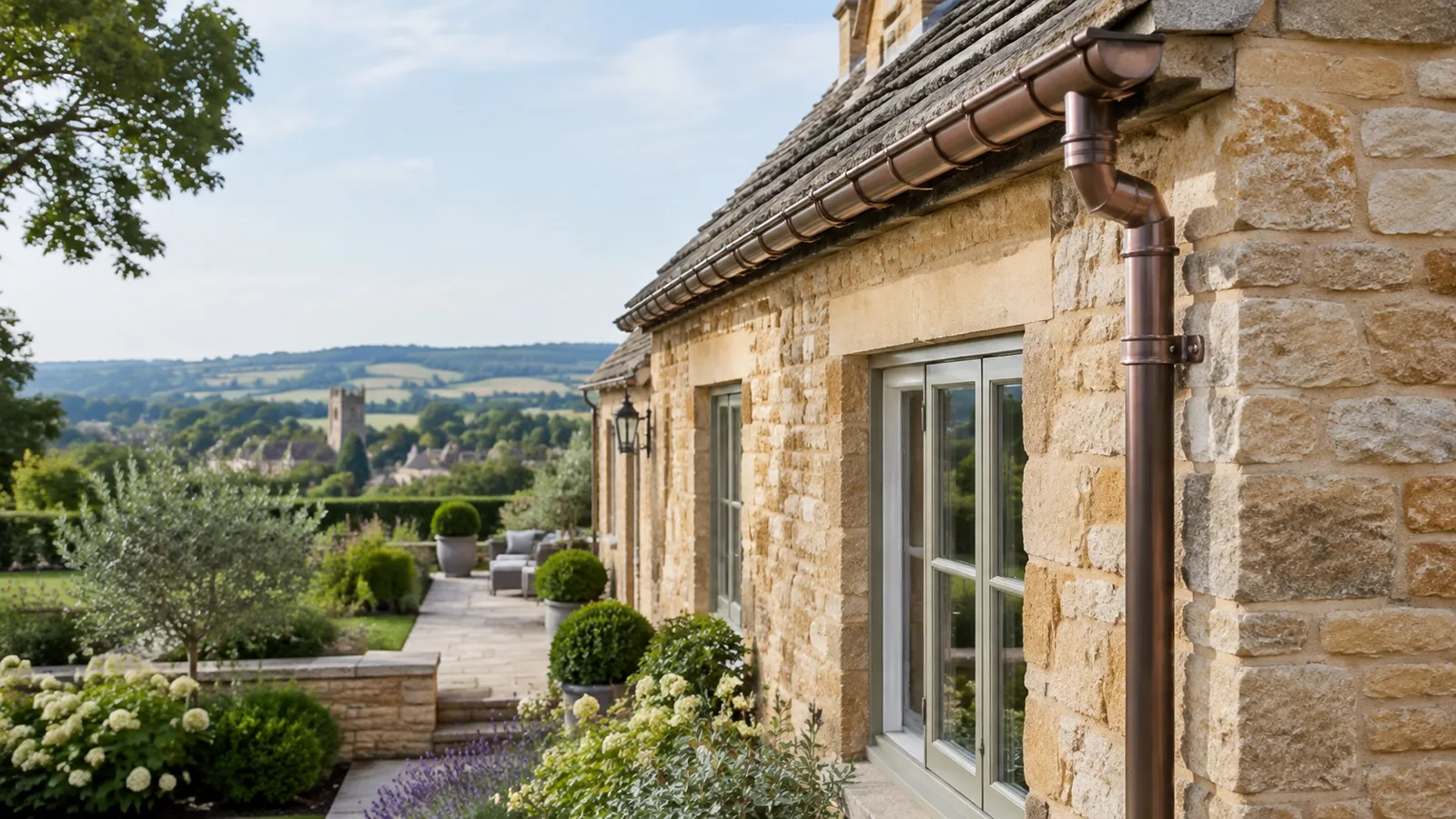
There is a particular quality to the light in our part of the world. On a still afternoon in Gloucestershire or across the high wolds of Oxfordshire, sunlight catches the oolitic limestone of a cottage or manor house, drawing out warmth from shades of pale cream, deep amber, and biscuit. It is an extraordinary building material, tactile and porous, carrying centuries of rural craftsmanship in every uneven course.
Yet precisely because Cotswold stone is so soft and expressive, the details framed around it matter enormously. Rainwater goods are not merely practical channels to keep damp out of deep-set lime mortar; they are the crisp pencil lines that define a building’s eaves. Choose the wrong colour, a clunky profile, or an unsympathetic modern finish, and the illusion of timeless character quickly fractures.
Understanding the Palette of Stone and Slate
When specifying rainwater systems against stone masonry, contrast must be handled with care. Many Cotswold properties sit beneath heavy stone slate or hand-split Welsh slate, which naturally darkens in wet weather. The gutter line bridges the divide between the deep charcoal or mossy green of the roof and the luminous face of the stone below.
Brilliant gloss black or stark white plastics often look glaringly artificial against aged limestone. Instead, considered restorations usually look to softer, historical hues:
- Matt and Satin Black: Traditional, unobtrusive, and timeless, grounding the eaves without creating harsh optical reflections.
- Deep Heritage Greys: Tones such as graphite, basalt, or slate grey harmonise smoothly with weathering slate roofs, creating a gentle transition.
- Muted Greens and Heritage Creams: Particularly effective when tying in with bespoke timber windows, painted fascias and soffits, or stable doors.
- Natural Metals: Materials that form their own protective patina, mellowing rather than fading over decades of exposure to English weather.
The Enduring Appeal of Cast Iron and Lead
For listed properties, conservation areas, and period farmhouses across Wiltshire and the Cotswolds, traditional cast iron remains the benchmark. Cast iron possesses an unmistakable texture—a slight grain and reassuring weight that modern, lightweight materials rarely emulate completely.
A classic half-round profile set upon rise-and-fall brackets driven directly into the masonry preserves the clean overhang of traditional roofs where no timber fascia board exists. On grander Georgian or Victorian additions, deep moulded ogee profiles lend a sculptural, cornice-like presence to the roofline.
Where downpipes meet complex valleys or parapets, decorative lead hoppers offer a magnificent, authentic focal point. Embellished with date stamps, family motifs, or simple fluting, lead softens to an ethereal silvery grey that sits in exquisite harmony with weathered limestone. Our restoration work frequently involves breathing new life into these historic systems, retaining as much original fabric as possible while safeguarding the building from modern deluges.
Modern Engineering: Aluminium and Authentic Alternatives
Preserving historic charm does not always require the maintenance demands of cast iron. Today, discerning homeowners can choose modern materials engineered to respect period architecture while offering exceptional longevity.
Aluminium guttering has become one of the most versatile choices for both historic properties and contemporary stone builds. Available in cast iron effect finishes, textured powder-coated aluminium captures the visual weight, collared pipework, and authentic bracket details of iron, but with none of the rust risks and at a fraction of the structural load. For mid-century houses, barn conversions, and extensions across Berkshire and the surrounding counties, sleek seamless aluminium runs provide clean lines, zero joints along the run, and outstanding high-capacity drainage.
At Bespoke Guttering Solutions by Austen Dawson, we bridge both worlds. While we delight in intricate heritage restoration and bespoke metalwork for listed country homes, we are equally at home undertaking everyday domestic aluminium installations for family houses seeking a neat, long-lasting upgrade. Each project shares the exact same standard of care and architectural sensitivity.
The Unmistakable Warmth of Living Metals
For those seeking something truly distinguished, natural copper and zinc present an appealing alternative to painted finishes. While initially bright, copper quickly oxidises in the British climate, progressing from a rich penny bronze to dark, earthy umber, and eventually developing traces of chalky verdigris.
This organic ageing process mirrors the natural patination of Cotswold stone as it weathers through damp winters and dry summers. Zinc, similarly, develops a self-healing velvet-grey patina that feels right at home alongside natural slate and drystone boundary walls, offering a quiet, Scandinavian-inspired elegance to architect-designed stone dwellings.
Protecting the Fabric of Your Home
A building’s roofline is its first line of defence against the elements. If you are planning an upgrade, restoring a period cottage, or seeking a durable system that honours the honeyed character of your stonework, we would be delighted to help you explore the ideal profiles, materials, and colours for your property. Please get in touch with our team to arrange an unhurried, comprehensive site survey.