There is an undeniable romance to owning a listed property in the Cotswolds. Whether it is a seventeenth-century yeoman’s cottage fashioned from honeyed guiting stone, an imposing Georgian rectory in Gloucestershire, or an early Victorian farmhouse nestled in the rolling valleys of Oxfordshire, these homes carry a palpable sense of stewardship. Yet with that architectural privilege comes a distinct responsibility—chief among which is defending ancient masonry and delicate lime mortar against the British weather.
Rainwater goods rarely steal the limelight when people daydream about historic renovations, but they are arguably the hardest-working feature on any period facade. When gutters fail on a listed building, water ingress does not merely cause damp; it dissolves friable lime, decays oak rafter feet, and stains historic masonry. Replacing or repairing them, however, is rarely as simple as heading down to a builders’ merchant.
Navigating Listed Building Consent
For owners in conservation strongholds across Oxfordshire, Gloucestershire, and North Wiltshire, any alteration that affects the character of a listed building requires formal Listed Building Consent. Even like-for-like repairs can occasionally sit in a grey area, depending on the severity of the intervention and the temperament of your local conservation officer.
Conservation officers are charged with preserving the historic integrity of our built heritage. When reviewing a proposed rainwater system, their primary concerns revolve around profile, authentic fixings, and material truth. They look at whether the guttering honours the vernacular architecture of the region or introduces alien textures and lines.
Approaching this dialogue with clear documentation, historic profiles, and samples of genuine materials often makes the difference between an effortless approval and months of frustrating planning revisions.
Traditional Materials: From Cast Iron to Lead
Historic rainwater systems were engineered to last generations, provided they received routine maintenance. When working on Grade II or Grade II* listed buildings, local authorities typically prefer authentic materials that mirror what would have originally adorned the eaves.
- Cast iron remains the undisputed gold standard for listed properties throughout the Cotswolds, offering exceptional structural rigidity, authentic deep-flow profiles, and the tactile texture that only sand-cast iron provides.
- Decorative lead hoppers offer both practical rainwater buffering and magnificent visual appeal, frequently cast with traditional motifs, date stamps, or family crests that elevate a historic elevation.
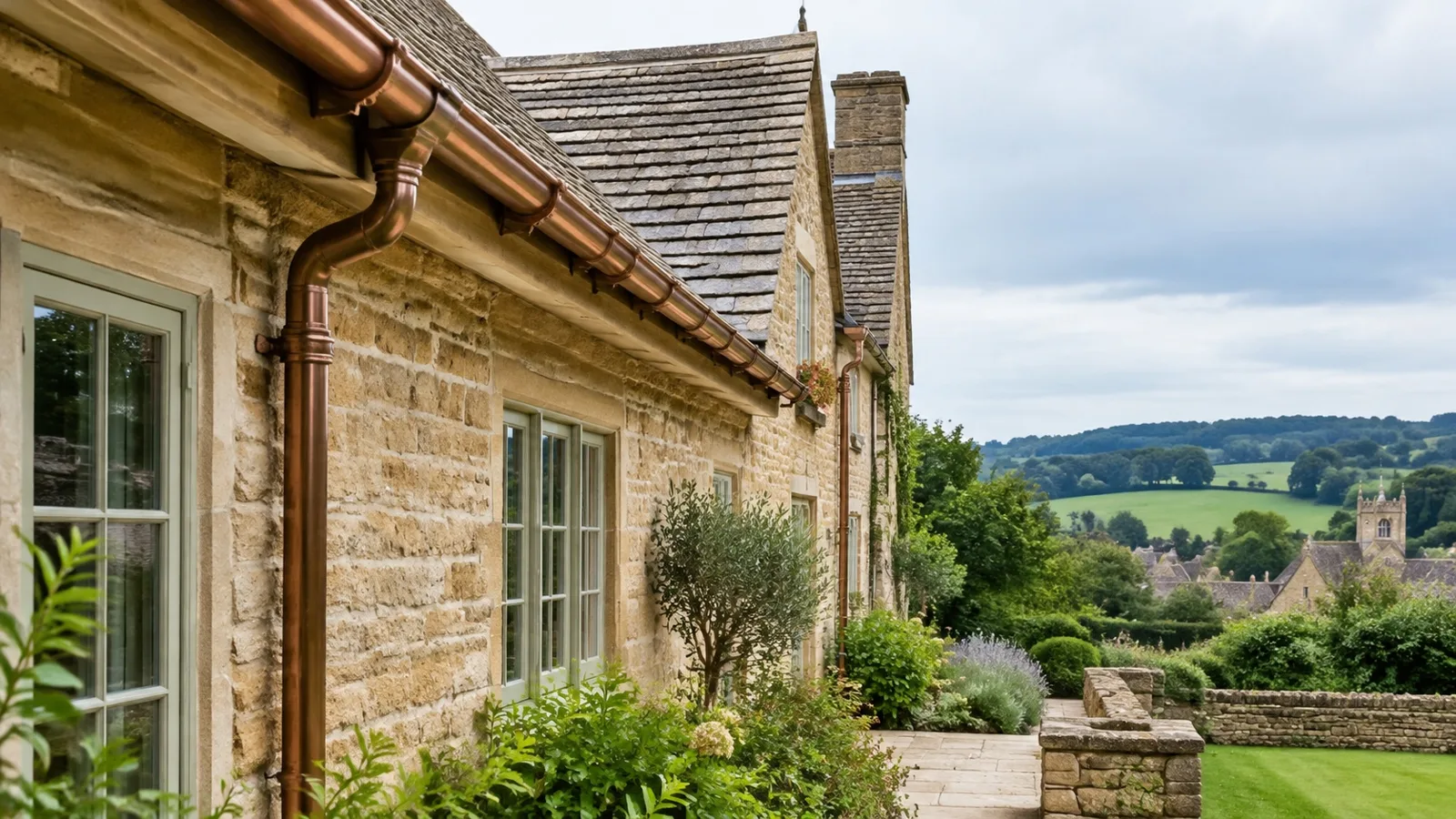
- Zinc and copper systems present durable, highly corrosion-resistant alternatives often approved for vernacular outbuildings, converted barns, or high-status restorations where natural patination is celebrated.
- Careful restoration of salvageable original ironwork, stripping back decades of failed paint and remounting sections with traditional linseed oil putty joints, can often satisfy conservation officers when complete replacement is deemed unnecessary.
Eaves Details: Brackets, Masonry, and Fascias
In modern construction, gutters are routinely clipped onto timber or uPVC fascias and soffits. Period Cotswold properties, however, frequently dispense with traditional timber fascias altogether.
Instead, you will often find guttering mounted directly to stone walls using drive-in spikes, or fixed to exposed rafter ends via bespoke rise-and-fall brackets. These fixings must be treated with immense care. Hammering new brackets into centuries-old limestone without understanding the underlying mortar or stonework can cause irreversible spalling and structural fractures.
Ensuring gutters follow the natural settlement of an undulating Cotswold roofline—while still achieving the subtle falls required to shed torrential downpours cleanly—is an art form in itself. It demands patience, bespoke metal bending, and an instinctive feel for historic buildings.
Sympathetic Craftsmanship for Every Home
A successful heritage installation does not merely replicate the past; it ensures your home is thoroughly protected against modern climate pressures, including the heavier, more concentrated downpours we now experience.
At Bespoke Guttering Solutions by Austen Dawson, we take genuine pride in striking this balance. While our team regularly carries out modern domestic installations using seamless aluminium and robust architectural aluminium guttering for everyday homes and contemporary additions, we treat our bespoke heritage restorations with the specialist reverence they deserve. We understand the specific expectations of district councils across the Cotswolds, Oxfordshire, and Wiltshire, and we source and hand-fit period-accurate systems that preserve the soul of your property.
If your listed home is due a rainwater overhaul, or if you simply wish to establish whether your existing ironwork can be restored or requires sympathetic replacement, we would be delighted to arrange a detailed, no-obligation on-site survey to assess your property's needs.