
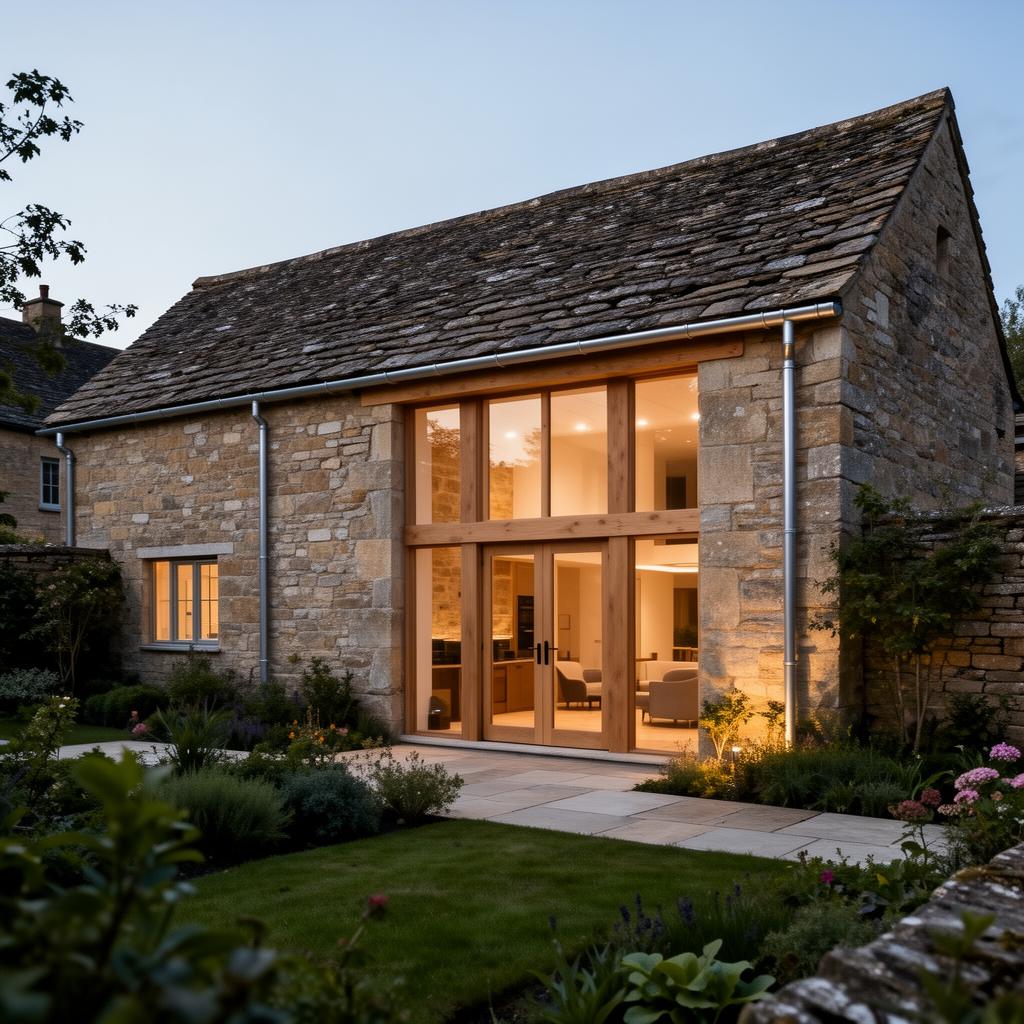
"What does new guttering cost?" is a fair question with an unsatisfying answer, because two houses of the same size can differ by a factor of four. Rather than quote a meaningless average, here is what actually moves the number.
1. Access
Usually the largest single variable. A bungalow reached from a ladder and a three-storey Georgian townhouse needing a scaffold or a tracked platform are different jobs before a single gutter is touched. Restricted access — a walled garden, a conservatory below the run, a listed boundary wall that cannot take a leg — pushes it further.
2. Material
In rough ascending order of cost:
- uPVC — cheapest, shortest life, and the wrong look on most character homes
- Powder-coated aluminium — the value choice for most homes; seamless runs, 25 year plus finish, no repainting
- Cast iron effect aluminium — a modest premium on plain aluminium for the period profile
- Cast iron — heavier material, heavier labour, periodic repainting
- Copper and zinc — specialist material and craftsmanship, specified where the elevation deserves it
3. The length and shape of the roof
Total run length matters less than the number of corners, level changes, valleys and separate elevations. Four short runs with eight stop ends and six corners cost more than one long clean run of the same total metreage.
4. Downpipes, outlets and hoppers
Downpipes are priced per run, and a tall house has long ones. Decorative hopper heads, swan necks around string courses and offsets around bays are hand-formed items — lovely, and not free. On period homes this detail is often a third of the material cost.
5. What is behind the gutter
Rotten fascia, decayed rafter feet or eroded stone fixing points are found on survey, not guessed at from the ground. Fascia and soffit replacement is common on 1960s to 1980s homes and should be quoted with the guttering, not discovered mid-job. See our fascias, soffits and copings work.
6. Listed status and conservation conditions
A listed building or an AONB conservation condition can dictate material, profile and colour, remove the cheapest options, and add documentation time. That is a real cost, and one worth knowing about before you compare quotes.
7. Removal and disposal
Taking down and disposing of old cast iron is heavy work. Taking down asbestos-cement rainwater goods, still present on some post-war and agricultural buildings, requires licensed handling.
How to compare quotations fairly
Ask every quoting company for the same four things: the material and profile, the gutter and downpipe sizes, the access method, and what is included for fascia repair. A cheap quote that omits scaffold or assumes sound timber is not cheaper — it is incomplete.
How we quote
We visit, survey the elevations, size the system for the roof area rather than by habit, and issue a written specification with the material, profile, fixings, access method and any timber repairs itemised. The figure you receive is the figure you pay unless something genuinely hidden appears, and we tell you before we act on it.
We work across the Cotswolds, Oxfordshire, Gloucestershire, Wiltshire and Berkshire from our Highworth workshop. Request a written quotation.