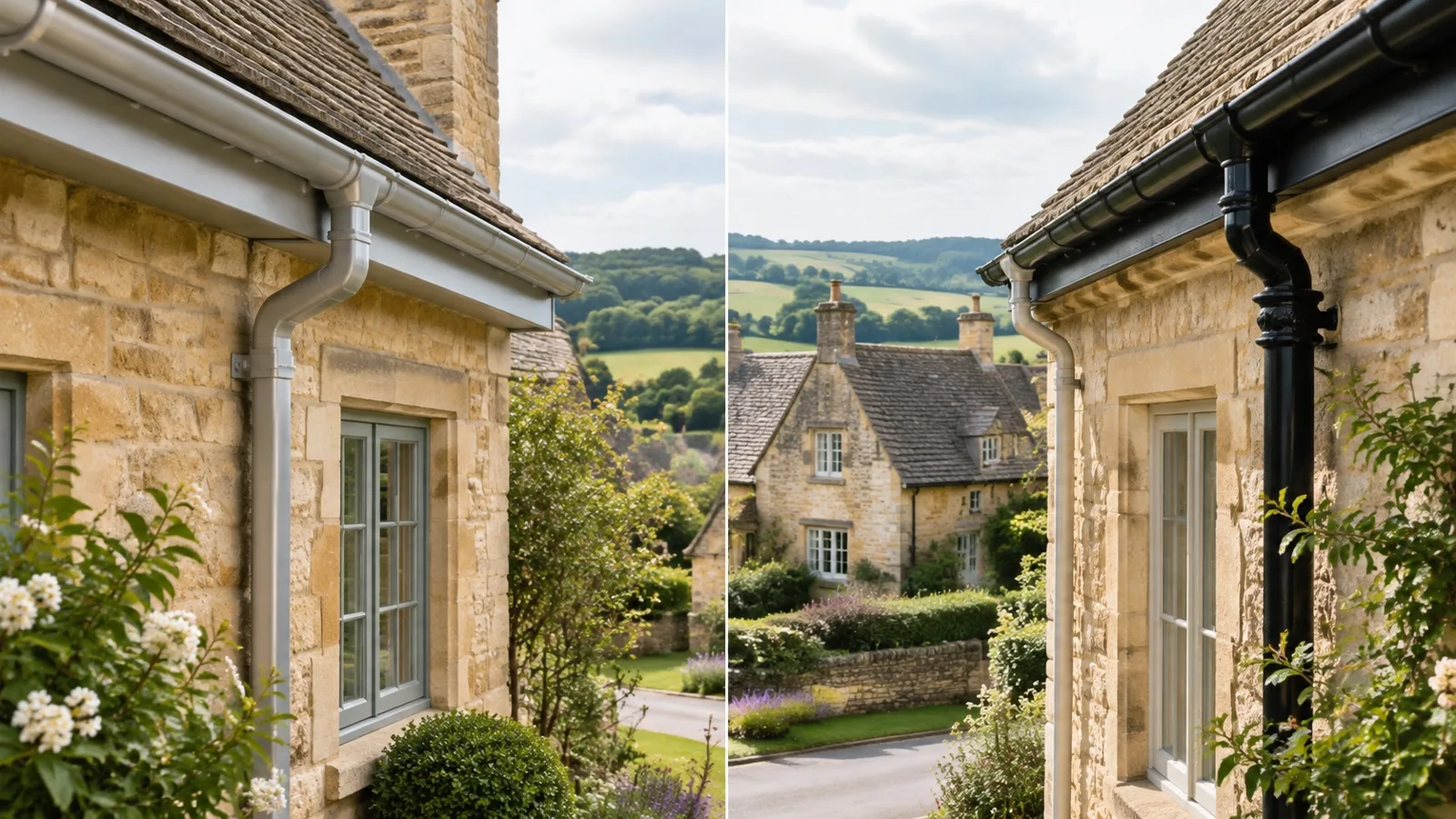
There is an unmistakable romance to Cotswold stone. Whether it glows amber in the late afternoon sun or weathers quietly through a blustery November afternoon, local architecture demands materials that respect its quiet gravity. Yet, while most homeowners devote hours to stone masonry, lime mortars, and timber sash windows, rainwater goods are frequently left as an afterthought.
That oversight can be costly. In a region characterised by sloping roofscapes, heavy seasonal downpours, and stringent conservation guidelines, your gutters perform an essential safeguarding role. When specifying new or replacement rainwater goods, the decision usually narrows to two distinguished materials: time-honoured cast iron and architectural aluminium. Both offer profound advantages, but each responds differently to the character of a Cotswold property, your maintenance appetite, and your budget.
The Enduring Heritage of Cast Iron
Cast iron is woven into the architectural fabric of the Cotswolds. From Georgian rectories in Gloucestershire to Victorian estate cottages across Oxfordshire, it is the benchmark material that conservation officers look for on Grade II and Grade II* listed buildings.
What sets cast iron apart is its tactile weight and authenticity. The sand-cast texture softens hard lines, resting against uneven rubble-stone walls with a natural, grounded presence that modern lightweight plastics simply cannot imitate. Accompanied by decorative brackets and ornate lead hoppers, cast iron looks entirely at home beneath stone tiles or reclaimed Welsh slate.
However, this permanence comes with responsibilities. Cast iron is exceptionally heavy, meaning it requires robust timber fascias or direct masonry fixing. It is also susceptible to oxidation if water settles in cracked paintwork. Traditional cast iron demands regular repainting every five to seven years, alongside meticulous clearance of moss and leaf debris. For listed properties requiring sympathetic restoration, nothing else will do, and with proper care, it can easily protect a roofline for over a century.
The Contemporary Precision of Aluminium Guttering
For many homeowners, the romance of historic paint maintenance loses its lustre after a few damp winters. This is where architectural aluminium guttering steps in. Far removed from the flimsy plastic systems that warp under temperature swings, modern aluminium is a structural, lightweight material engineered to endure British weather without fuss.
Available in sleek, factory-finished polyester powder coatings, aluminium mimics the deep, textured look of heritage metalwork while eliminating rust entirely. On contemporary builds, glass-and-oak barn conversions, or unlisted village cottages, seamless aluminium or extruded sectional systems provide a clean, uncluttered profile that directs water away with remarkable efficiency.
Aluminium is impervious to rot, rust, and corrosion. It expands and contracts minimally compared to PVC, preventing joint failure over time. For busy households, its appeal lies squarely in its "fit and forget" nature: aside from an annual clearance of autumn leaves, the finish remains pristine for thirty years or more without a drop of paint.
Weighing the Differences: Cost, Care, and Character
Choosing between these two heavyweights depends on your building's regulatory status and your expectations for ongoing upkeep. When comparing both materials side-by-side, several key distinctions emerge:
- Aesthetic and Planning Compliance: Cast iron remains the default choice for listed homes and sensitive conservation areas. Aluminium is increasingly accepted where heritage profiles are used, but cast iron provides guaranteed compliance.
- Initial Investment: Aluminium is substantially lighter and quicker to install, reducing labour costs. Cast iron requires heavy-duty fixings, specialist handling, and on-site painting, which pushes initial capital outlay significantly higher.
- Long-Term Maintenance: Cast iron must be periodically sanded, primed, and coated with specialist metal paint. Aluminium requires no ongoing decoration whatsoever.
- Longevity: A diligently painted cast iron system can last well beyond one hundred years. A high-grade aluminium installation will comfortably achieve a thirty- to fifty-year lifespan without structural degradation.
Matching Rainwater Goods to Cotswold Homes
There is no single correct answer for every property. Many historic dwellings across Wiltshire and Oxfordshire benefit immensely from a sensitive restoration of their original cast iron downpipes, paired with new, identical castings to preserve their timeless charm. Conversely, an increasing number of homeowners choose modern aluminium guttering for standard domestic re-roofing projects, side returns, or garage blocks to keep maintenance to an absolute minimum.
At Bespoke Guttering Solutions by Austen Dawson, we take pride in understanding both worlds. We undertake everyday domestic aluminium jobs—neatly integrated with new fascias and soffits—just as happily as we design bespoke heritage rainwater systems complete with period-accurate profiles and lead hoppers. We appreciate that a mid-century home in Berkshire requires a very different engineering mindset to an Elizabethan manor nestled in a Gloucestershire valley.
Before committing to a material, it is always wise to take a measured look at your rooflines, evaluate the integrity of your masonry, and consult with experienced hands.
If you are planning an upgrade or need advice on the ideal rainwater system for your property, we would be delighted to visit your home and provide a thorough, professional survey.