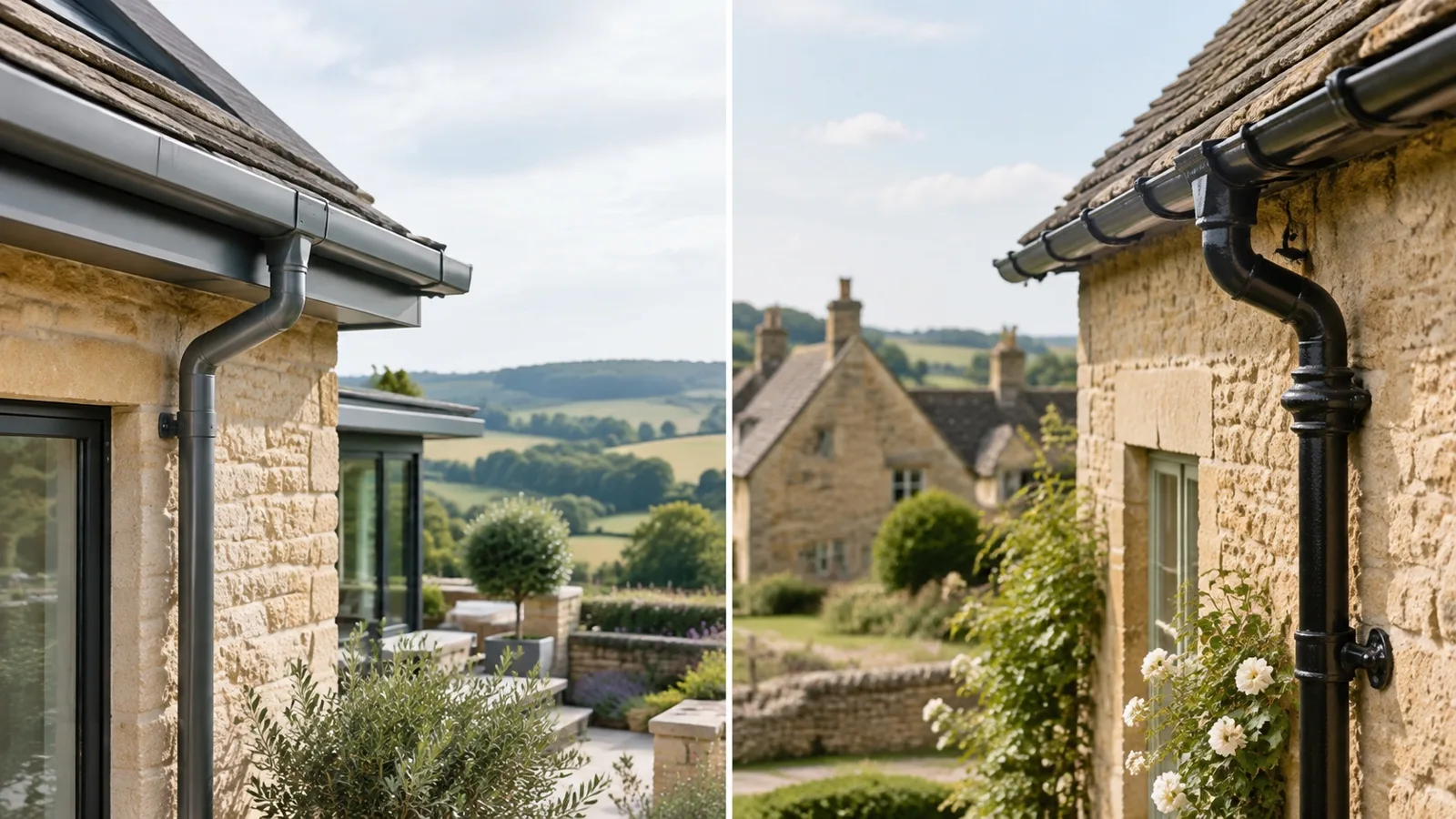
There is a particular poetry to the way rainwater moves across a Cotswold roof. Whether streaming down weathered stone slates on a medieval tithe barn or slipping over clay pantiles on a modern village extension, water needs a dependable route to earth. Yet rainwater goods are far more than mere plumbing; they frame the architecture, drawing clean shadow lines beneath the eaves and anchoring a building within its vernacular setting.
For homeowners across the honey-toned villages of Gloucestershire, the rolling combes of Oxfordshire, and down into the chalk-edged valleys of Wiltshire, replacing rainwater profiles brings a classic dilemma: do you invest in traditional cast iron, or opt for contemporary aluminium guttering? Both materials have earned their place under British skies, but understanding how they perform, age, and cost will help you choose the right companion for your home.
The Enduring Soul of Cast Iron
For centuries, cast iron has been the undisputed champion of British heritage architecture. On a listed 17th-century cottage or an imposing Georgian manor, nothing quite matches the substantial presence of heavy, sand-cast metal. It carries a tactile weight, a soft irregular texture, and crisp, historic profiles that modern plastics simply cannot replicate.
Cast iron is revered for its incredible strength. It does not buckle under heavy snowfall, and ladder work against the eaves poses little threat of distortion. Paired with ornamental brackets and decorative lead hoppers, it forms an integral part of historical building restoration, frequently demanded by conservation officers throughout the Cotswold conservation areas.
However, that timeless quality comes with a commitment. Cast iron is heavy, requiring sturdy rafters, sound fascias and soffits, and skilled installation. It also demands periodic redecoration. Left untended, minor chips in the exterior paint allow moisture to meet iron, inviting rust. With disciplined maintenance—repainting every five to ten years—a cast iron installation will easily outlive its custodians, celebrating a centenary with grace.
The Modern Versatility of Aluminium
While cast iron looks back to history, modern aluminium guttering looks squarely at the practical demands of the present day. Far removed from the flimsy metals of past decades, architectural-grade extruded or seamless aluminium combines structural rigidity with surprising lightness.
Where aluminium truly excels in the Cotswolds is its extraordinary resistance to corrosion. When aluminium oxidises, it naturally forms a protective barrier that arrests decay. Finished in an advanced factory-applied polyester powder coat, aluminium requires virtually no routine painting. For contemporary oak-framed builds, modern barn conversions, or standard domestic properties where busy schedules preclude weekend ladder work, it offers an exceptionally low-maintenance solution.
Visually, aluminium has evolved. Today, textured finishes emulate the traditional surface of sand-cast iron so convincingly that, from the garden path, even seasoned heritage professionals take a second glance. Available in classic heritage black, muted anthracite, or bespoke RAL colours chosen to complement local oolitic limestone, it bridges the gap between historical character and modern ease.
Durability, Maintenance, and Cost Compared
Weighing these materials side by side involves balancing initial outlay against long-term care and aesthetic authenticity:
- Aesthetics: Cast iron remains the authentic benchmark for Grade II and Grade I listed dwellings. Aluminium offers crisp, sleek lines for contemporary homes alongside convincing textured heritage profiles for unlisted period cottages.
- Lifespan: Both metals are lifetime investments. Cast iron can surpass 80 to 100 years if painted diligently. Powder-coated aluminium typically delivers 40 to 50 years of trouble-free service without repainting.
- Maintenance: Cast iron requires regular inspections, touch-ups, and cyclic painting cycles. Aluminium merely asks for an occasional rinse and a regular seasonal clearance of fallen autumn leaves.
- Initial Investment: Cast iron demands a higher initial capital outlay, both for the raw casting and the labour required to lift, seal, and bolt its heavy sections. Aluminium is significantly lighter and quicker to install, offering an accessible mid-tier cost point.
Striking the Right Balance for Your Home
The architectural landscape of our region is wonderfully diverse. A single parish often encompasses 400-year-old thatched cottages alongside mid-century brick homes and striking modern zinc-roofed extensions. Rainwater solutions cannot be one-size-fits-all.
At Bespoke Guttering Solutions by Austen Dawson, we treat every building on its own architectural merits. Our team is as comfortable undertaking intricate heritage restoration—sourcing bespoke cast iron profiles, fitting lead hoppers, and repairing historic eaves—as we are installing sleek, everyday domestic aluminium systems on modern family houses. Whether you are balancing conservation restrictions on an ancient vicarage or seeking an elegant, fuss-free upgrade for a 1960s detached home, the ideal material is one that respects both the architecture of your house and your lifestyle.
If you are considering updating the rainwater goods on your property, we would be delighted to visit, assess your roofline, and provide an honest, unhurried survey to help you determine the best path forward.