A Considered Guide
Cast Iron vs. Cast Iron Effect Guttering
For homeowners weighing heritage aesthetics against cost, this guide compares traditional cast iron and modern cast iron effect guttering across the qualities that matter most: durability, conservation suitability, long-term value and the character of the property itself.
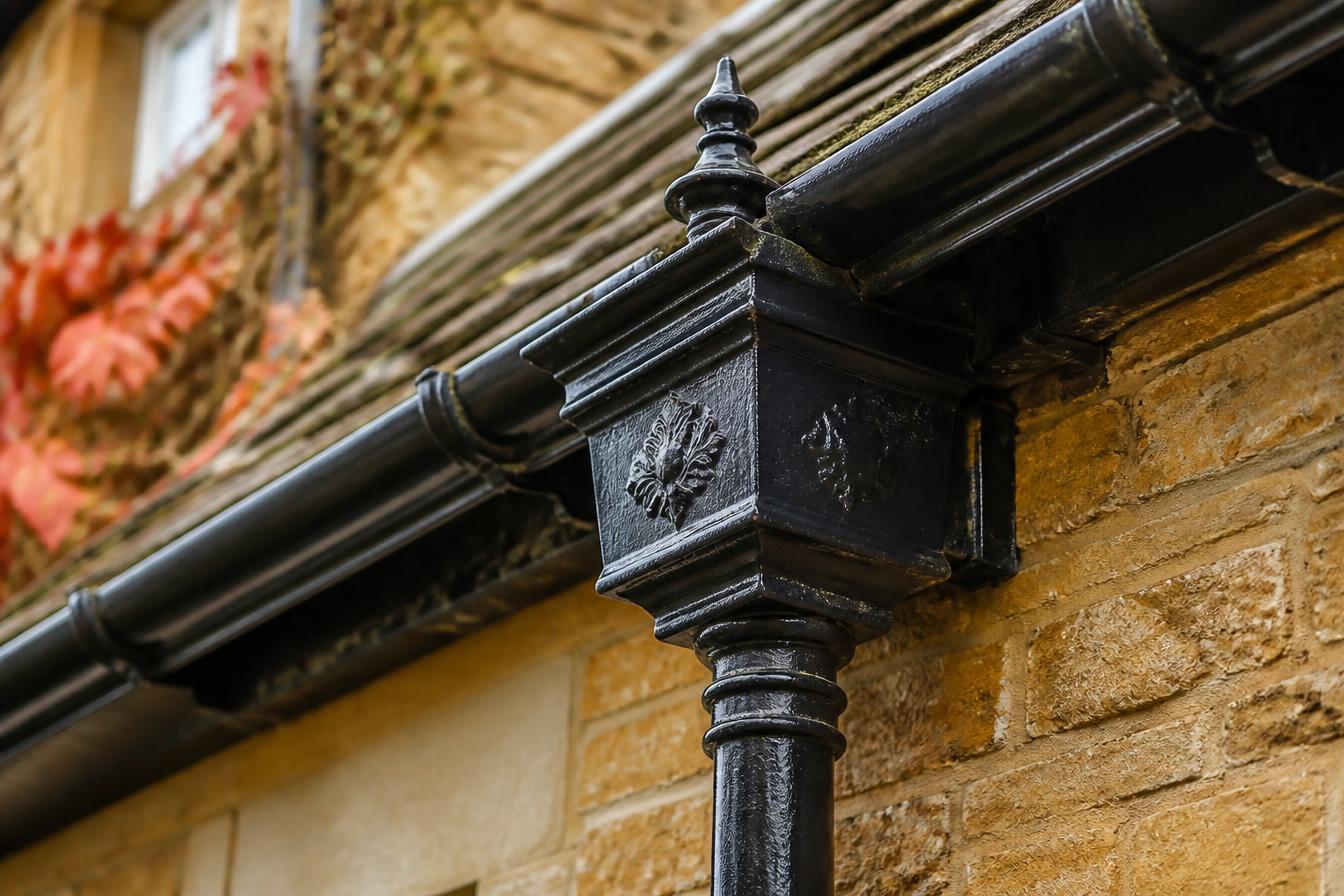
Traditional cast iron hopper with ogee profile, the detail that defines a period façade.
Head to Head
How genuine cast iron and cast iron effect systems compare in practice.
Material & Construction
Traditional Cast Iron
Sand-cast from molten iron, often with traditional half-round, ogee or ornamental moulded profiles. Every joint is hand-soldered or caulked, and brackets, hoppers and offsets are individually cast.
Cast Iron Effect
Extruded aluminium or uPVC with a textured, powder-coated finish designed to mimic the look of cast iron. Profiles are pressed rather than cast, giving a lighter, uniform section.
Weight & Structural Load
Traditional Cast Iron
Dense and heavy. Requires robust fascia boards and properly spaced cast brackets. The mass contributes to acoustic dampening, rainwater runs quietly.
Cast Iron Effect
Significantly lighter. Easier to handle on site and places less load on older fascia boards, though it can be more susceptible to wind uplift if not fixed correctly.
Durability & Lifespan
Traditional Cast Iron
With proper maintenance, 60–100+ years. The material develops a stable patina. Joints may need re-caulking after 20–30 years, but the iron itself endures for generations.
Cast Iron Effect
Powder-coated aluminium variants last 30–50 years if the coating remains intact. uPVC versions are typically 20–30 years and can become brittle with UV exposure over time.
Heritage & Conservation
Traditional Cast Iron
The only choice for Grade I and Grade II listed buildings, conservation areas and National Trust properties. Conservation officers almost always insist on genuine cast iron for like-for-like replacement.
Cast Iron Effect
Increasingly accepted on unlisted period properties where visual harmony matters but budget is constrained. Some local authorities permit it on minor ancillary buildings.
Maintenance Requirements
Traditional Cast Iron
Requires periodic repainting (every 8–12 years) and joint inspection. We offer tailored care plans that extend the life of original ironwork and catch issues before they become costly.
Cast Iron Effect
Lower maintenance overall, mainly keeping outlets clear and checking for coating damage. Once the finish is compromised, corrosion can accelerate quickly on aluminium.
Cost (Supply & Install)
Traditional Cast Iron
Higher initial outlay, reflecting the material cost, weight handling and skilled installation. The investment pays back over decades in longevity and authenticity.
Cast Iron Effect
Lower upfront cost and faster installation. A sensible interim solution for properties where budget is the deciding factor, though replacement cycles are shorter.
Making the Choice
Which approach is right for your property?
Choose traditional cast iron when…
- Your property is listed, in a conservation area, or subject to an Article 4 direction
- You are restoring a period façade and need authentic profiles, hoppers and brackets
- You intend to remain in the property long-term and value generational durability
- You appreciate the acoustic qualities and heft of genuine iron rainwater goods
- You are working with a conservation architect or heritage consultant
Consider cast iron effect when…
- Your property is not listed but sits within a period streetscape where appearance matters
- Budget constraints make genuine cast iron impractical in the short term
- You need a lightweight solution for an extension or outbuilding
- You want the visual character of iron without the associated weight and maintenance schedule
- You plan to upgrade to cast iron at a later stage and need a temporary harmonious solution
Our View
"Where budget demands a cast iron effect system, we will specify and install it to the same standard we apply to genuine iron. But where the architecture calls for it, and where the property will be lived in for decades, traditional cast iron remains the only material that truly belongs."
– AD Bespoke Guttering
Common Questions
Questions we are asked most often.
Can I use cast iron effect guttering on a listed building?
Generally, no. Conservation officers and heritage bodies almost always require like-for-like replacement on listed properties, which means genuine cast iron. We liaise directly with officers to ensure every specification meets listed building consent requirements.
How much longer does cast iron last compared to cast iron effect?
Well-maintained cast iron will outlast any effect system by two to three times. While powder-coated aluminium effect guttering may offer 30–50 years, traditional cast iron routinely exceeds 100 years, and in many cases, the ironwork outlives the building itself.
Is cast iron effect guttering cheaper to install?
Yes, the upfront cost is lower and installation is quicker because the material is lighter and easier to handle. However, factor in the shorter replacement cycle and the potential loss in property value or conservation compliance on sensitive buildings.
Does cast iron effect look identical to real cast iron?
From ground level and at a distance, a high-quality powder-coated aluminium system can be convincing. Up close, the weight, acoustic properties and the crisp detail of cast profiles reveal the difference. For conservation purposes, only genuine iron will satisfy.
Do you supply and install both systems?
We do. AD Bespoke Guttering supplies and installs bespoke traditional cast iron, copper, zinc and aluminium systems, including high-quality cast iron effect where it is the right choice for the property and the brief.
Arrange a Consultation
Every property deserves a considered response.
Speak with us directly about your property, its period and the work it requires. We will advise honestly on whether cast iron or cast iron effect is the right choice, and guide you through the conservation process where required.
Begin a Project
Let's start a conversation.
Share a little about your property and requirements. We'll be in touch personally within one working day to arrange a site visit.
- 7a High Street, Highworth, SN6 7AG
- 01367 248417
- guttering@austendawson.co.uk